LED PCB for Grow Lights
Custom LED PCB solutions for grow lights, including board layout optimization, PCB material options, and project-based manufacturing support.

Grow Light PCB Solutions for Horticultural Projects
Grow light PCB design differs from general lighting PCB design because horticultural projects place greater demands on spectrum layout, LED density, thermal management, control compatibility, and stability during long-hour operation. We provide custom PCB solutions for indoor grow, greenhouse lighting, and vertical farming systems, with board formats and assembly options tailored to your application, lighting plan, and project needs.
Custom Board Formats
Quantum boards, strip PCBs, multi-bar boards, and custom formats
Spectrum-Based Layout Support
Based on LED package selection and wavelength combinations
SMT Assembly Available
LED mounting, wiring, and module integration available
For Horticultural Applications
For greenhouse lighting, vertical farming, and indoor grow systems

Typical Grow Light PCB Types We Manufacture
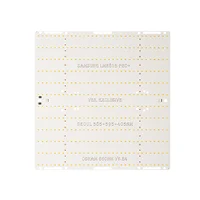
Quantum Board PCB
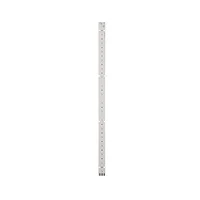
Grow Light Strip PCB
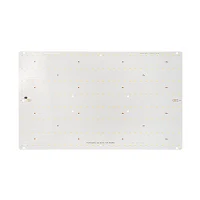
Full-spectrum Grow Light PCB
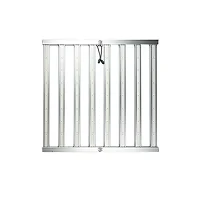
Multi-Bar Grow Light PCB
Under Canopy Grow Light PCB
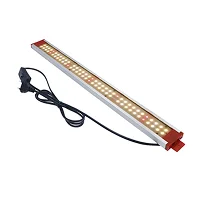
LED Modules for Grow Fixtures
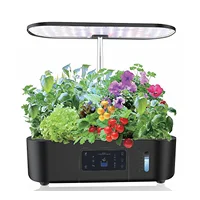
Looking for complete LED grow light products? View our LED Grow Light category →
Where Our Grow Light PCB Is Commonly Used
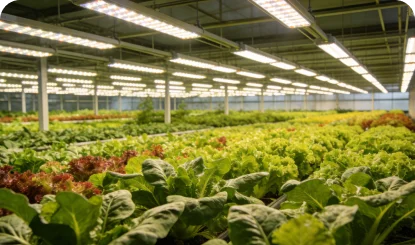
Commercial Greenhouse Lighting
For commercial greenhouse projects we often use multi-bar or linear grow light PCBs, with emphasis on thermal stability, moisture resistance, uniform coverage, and long-hour operating reliability.
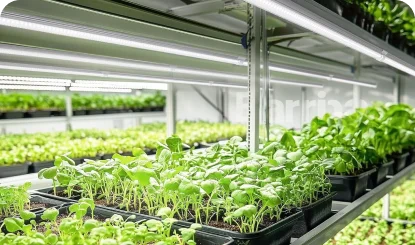
Vertical Farming Systems
For vertical farming systems, strip PCBs or compact multi-bar boards are commonly used, requiring high LED density, balanced spectrum layout, slim form factors, and efficient heat dissipation.
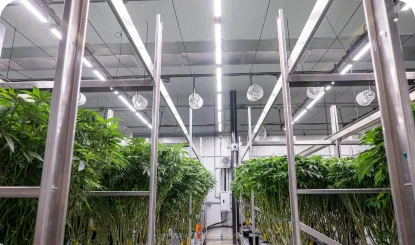
Indoor Grow Racks
Indoor grow racks usually fit linear PCBs or quantum boards, with design focused on spacing efficiency, light uniformity, driver compatibility, and easy fixture integration.
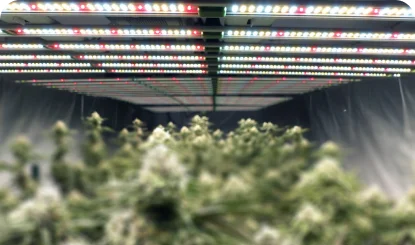
Grow Tents and Small-Scale Systems
Grow tents and small-scale systems frequently employ quantum boards or small custom modules. We prioritize cost-effective layout, thermal control, dimming, and compact size.
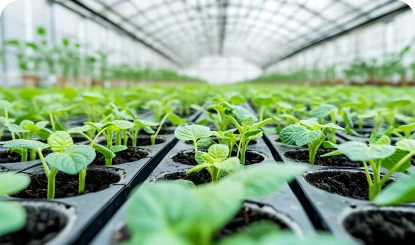
Seedling and Propagation Lighting
For seedling and propagation stages, we use full-spectrum PCBs or strip boards, focusing on gentle light distribution, spectrum consistency, low heat, and stable output.
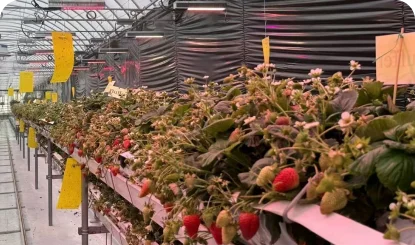
Inter-lighting for Dense Crops
Inter-lighting for dense crops often uses under-canopy PCBs or narrow strip boards. Slim profiles, targeted beam coverage, moisture resistance, and reliable wiring are required.
Key Design Considerations for Grow Light PCB

Spectrum Layout
Different crops and growth stages can have distinct wavelength combination needs. PCB layout should be planned based on LED selection, wavelength combinations, density, and intended lighting strategy.

Thermal Management
Grow light boards often require long-term use with high LED density. Their long-term stability depends on the materials used, thickness, board layout and the thermal path design.

Light Uniformity
The LED arrangement on PCB will affect the light distribution, fixture integration and the consistency of the whole system. Board design must have a balance in density, uniformity, and manufacturability.

Driver Compatibility
Some grow light projects may need 0-10V, PWM or other controls. The LED PCB design must consider the electrical connection, interface layout, and compatibility with the chosen driver solution.

Environmental Conditions
Since grow light PCBs could be used in greenhouses or indoor farming, the humidity, temperature variations and extended operation hours should be taken into consideration in design and manufacture.
Typical Specifications & Customization Options
Options for grow light PCB projects, and the final board configuration can be adjusted based on fixture design, thermal targets, control requirements, and production scope.
Typical Build Options
- PCB material: Aluminum PCB, MCPCB, selected FR4 solutions
- Board shape: Square, rectangular, linear, custom formats
- LED types: SMD2835, SMD3030, and other project-based options
- Spectrum options: Full spectrum, red, blue, deep red, mixed combinations
- Assembly support: SMT, connectors, wiring, module integration
- Protection options: Based on project environment and manufacturing scope
Customizable Parameters
- Board dimensions
- PCB thickness
- Copper thickness
- LED density and spacing
- LED layout arrangement
- Connector location
- Mounting hole design
- Dimming compatibility
- Silkscreen and labeling
- Project quantity
Related Grow Light PCB Projects
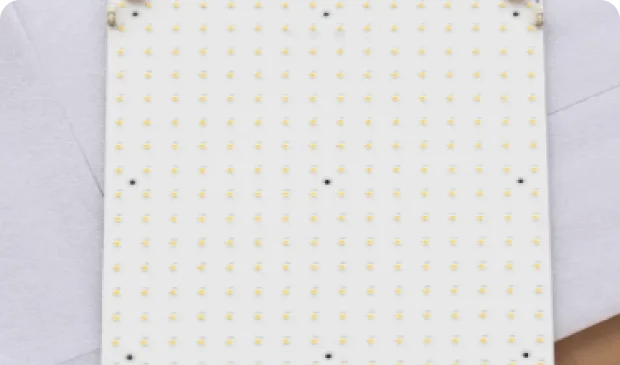
109W LED Grow Light Panel and Power Cabinet Solution for Large-Scale Canadian Cultivation
In a large-scale Canadian cultivation facility, growing efficiency has taken a leap forward. Custom 109W LED panels empower growers to optimize plant yields, with modular power cabinets solving voltage compatibility and speeding up deployment times.
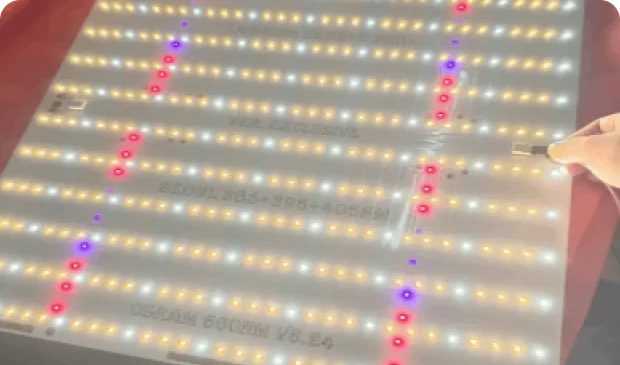
200W Samsung281B Pro Grow Lights for German Tomato Farm
Growing premium tomatoes across a German greenhouse operation with Samsung281B Pro+. Growers boost yields by 35% and eliminate cooling costs through optimized spectrum and superior heat dissipation, maximizing profitability.
FAQs about Grow Light PCB
How can I customize an LED grow light PCB for my fixture design?
We can customize LED grow light PCBs based on your fixture structure, target spectrum, board size, LED layout, mounting method, and power requirements. Whether you need a quantum board, bar light PCB, circular board, or other custom shape, our team can help adapt the PCB design to match your lighting application and assembly needs.
Do you provide PCB assembly for LED grow light boards?
Yes. We provide PCB assembly for LED grow light boards, including SMT assembly for LEDs and related electronic components. This allows customers to source both custom LED grow light PCB manufacturing and assembly from one supplier, helping improve production efficiency, quality consistency, and project coordination.
How can I choose between aluminum PCB and FR4 for grow lights?
The choice between aluminum PCB and FR4 depends on the thermal and power requirements of your grow light application. Aluminum PCB is often preferred for LED grow light PCB projects that need better heat dissipation and stable performance under higher power density. FR4 may be suitable for lower-power grow light boards or designs with less demanding thermal conditions. The best option depends on your LED density, fixture structure, and cost target.
How can I send my files for a custom grow light PCB quote?
Please send your files as email attachments directly to [email protected]
. You can include documents such as Gerber files, BOM, PCB dimensions, LED requirements, and any project drawings or specifications so our team can review your custom grow light PCB inquiry more efficiently.
How do you improve heat dissipation in LED grow light PCB design?
Heat dissipation in LED grow light PCB design can be improved through material selection, board structure, copper thickness, and LED layout optimization. Common solutions include using aluminum-based PCB materials, increasing thermal conductivity, optimizing LED spacing, and designing the board to support better heat transfer. Good thermal management helps reduce heat buildup and improves the reliability of the grow light PCB.
What types of LED grow light fixtures can custom PCBs be used for?
Custom LED grow light PCBs can be used in a wide range of fixtures, including quantum boards, bar lights, panel lights, modular grow light systems, and other horticultural lighting designs. If you also want to explore complete grow light products, you can visit our LED Grow Light product category for more fixture options and application references.
Start Your Grow Light PCB Project
Share your board type,target spectrum, dimensions, LED requirements, power target, and quantity. Our team will review your needs and provide the best solution for your project.