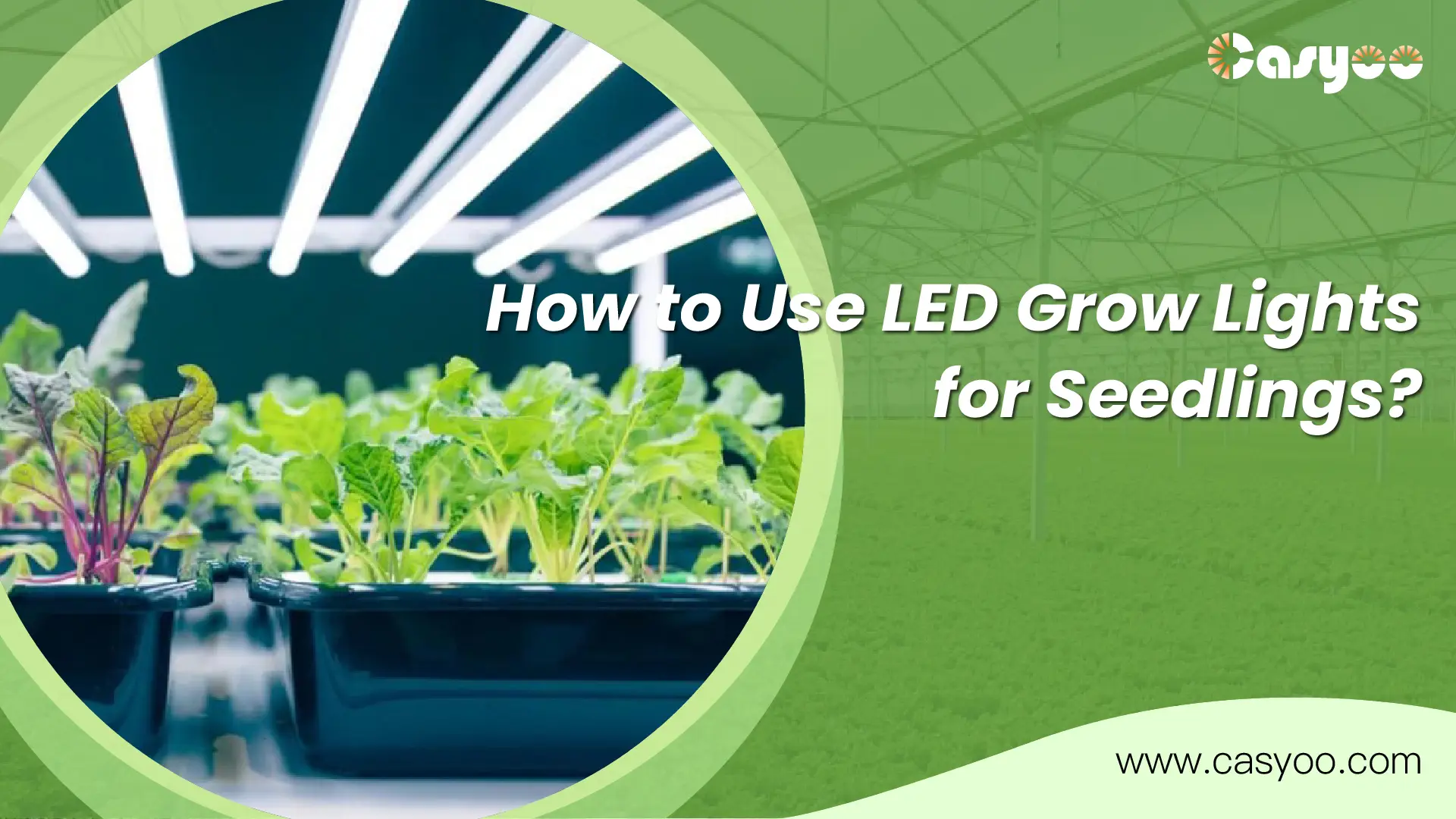
Starting your seedlings under LED grow lights can be a complex topic, but you will find it’s much easier than you thought after reading this post. In this article, we will walk you through everything you need to know about using LED grow lights for seedlings.
Are LED lights good for growing seedlings?
Have you ever had seedlings on a windowsill that are quite skinny and tall, or even fell against the window? This is actually because the seedlings are straining to access the light source, which in turn, might lead to its overgrowing, overturning and even breaking. One of the best ways to solve this problem is to use LED grow lights designed specifically for seedlings. Unlike regular window light, grow lights provide sufficient and stable light on rainy days and in winter, keeping seedlings compact and strong.
When deciding whether to use grow lights for seedlings, you also need to consider the type of plant. Some light-demanding seeds (such as lettuce and carrots) require light to germinate successfully, while light-inhibited seeds (such as onions and leeks) germinate better in the dark.
What kind of grow light is best for seedlings?
What color grow lights for seedlings should I buy?
For seedlings growing indoors, choose a full-spectrum grow light. Full spectrum light is the closest to natural sunlight and you get the ideal balance of red and blue light.
Blue light regulates plant growth and keeps plants short and strong, but too much blue can also cause stunted plants over time. Red light will stimulate vegetative growth and flowering, but too much red light will make plants tall and skinny. Ordinary household incandescent light bulbs emit primarily a warm light that gives off a cozy atmosphere but is not suitable for plants.
Best watt & lumens & PPFD: What is the best light intensity for seedlings?
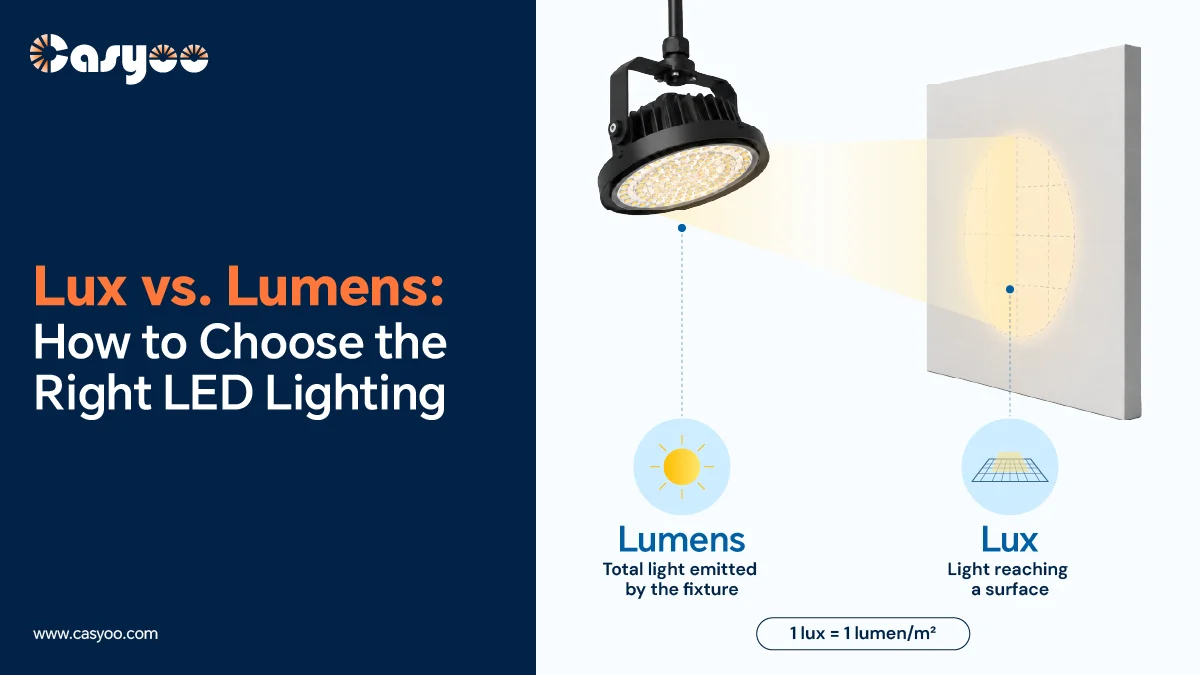
To understand the light intensity required by plants, it’s important to understand that wattage and lumens aren’t the reference values for horticultural lighting; PPFD is. Wattage and lumens only suggest the brightness as perceived by the human eye, whilst PPFD portrays the actual numbers of photons that the plants can use in the unit area. As a rule of thumb, a PPFD value of 200-400 μmol/m²/s is adequate to cultivate seedlings.
In practice, you can adjust the distance based on the recommended distance in the fixture’s manual and the plant’s response. As an example, some 20W LED strip grow lights offer appropriate levels of light at 6-12 inches (15-30 cm) distance to seedlings.
How to set up LED grow lights for seedlings
When do I put my seedlings under LED grow lights?
You should place your seedlings in the light as soon as the first seedlings sprout. But as I mentioned before, some types of seeds require light to germinate. In this case, you should put them under light immediately after planting them.
How long should LED grow lights be on for seedlings?
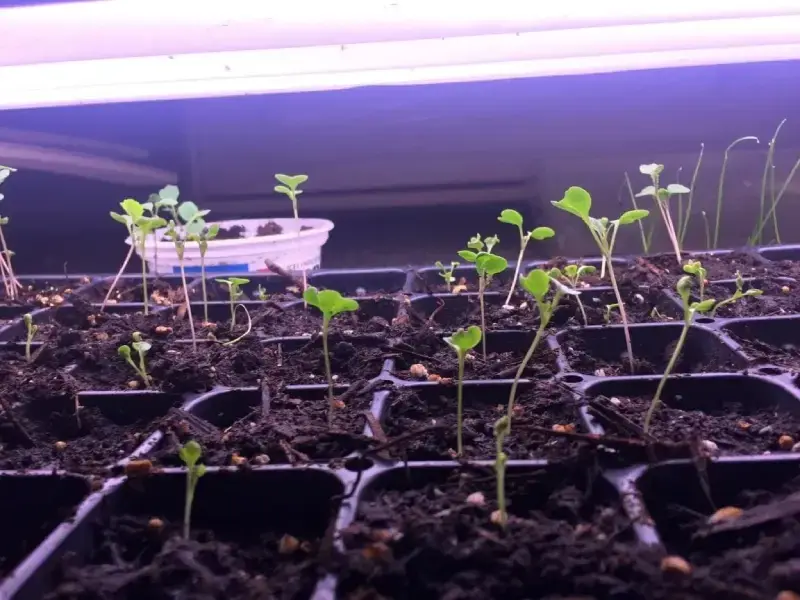
Once germinated, seedlings will need 12-16 hours of light per day, depending on your plant type.
If you’re new, I recommend starting with leaving the lights on 14 hours a day. Then keep a close eye on your seedlings. If they start to stretch, increase it to 16 hours a day. On the other hand, if they stay compact, then you can reduce the amount of light to 12 hours to save some energy and see how they perform in less light.
How far away should grow lights be from seedlings?
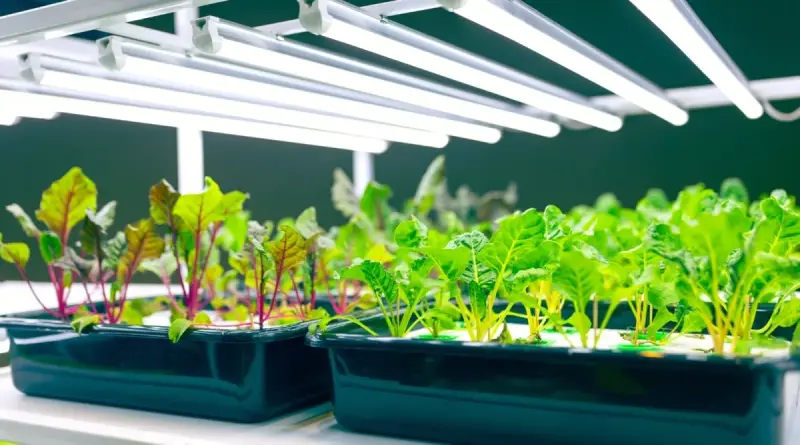
Grow lights need to be very near to your seedlings to be most effective. You should put them 2-3 inches above the plant canopy. If your intensity setting is adjustable, you can move the fixture higher (6-12 inches above).
You’ll also need to adjust the height regularly. The leaves of the seedlings should not come into contact with the bulbs, or they may burn your seedlings. So check your seedlings daily and move your lights further if necessary.
How to monitor and adjust seedling grow lights
When to remove seedlings from grow lights?
The first and most obvious sign is the development of true leaves. Once your seedlings have successfully grown the first or second pair of true leaves and they look plump, healthy and dark green, then you can be sure that your seedlings are getting enough energy from the LED light.
Secondly, pay attention to the degree of crowding in the environment. If the leaves of the seedlings begin to touch or even intertwine, this means they need more space and a wider angle of light. At this time, they should be transplanted and repotted to prevent excessive growth and uneven development.
How to tell if seedlings have too much light?
The most classic sign of excessive light is leaf burn. You’ll notice irregular brown or white burn spots developing along the edges or tips of the top leaves of the seedlings, closest to the light source. If the seedlings stagnate, their leaves curl downward and inward, or their stems become unusually short and thick without extending, these signs of excessive light may also be present.
How often should you water seedlings under grow lights?
If the soil surface appears to be lighter in color and feels dry when you insert your index finger about one knuckle (2-3 cm) below the soil surface, you need to water it. When you are watering, water slowly and thoroughly until you see the water coming out of the drainage holes at the bottom of the pot.
Do you need to rotate your seedlings?
If you can provide adequate light for your seedlings, then you don’t need to rotate them. However, if you see some seedlings on the outer edges begin to stretch, you’d better rotate them every day to ensure even growth.
Tips on how to start seedlings under grow lights
Here are some tips to help you successfully start seedlings under grow lights:
- Keep the soil moist at all times, but not soaked.
- Use fertilizer only when the plants have true leaves.
- Keep the temperature around 18-24°C (65-75°F) during germination.
- When transplanting seedlings, remember the hardening-off period before placing them outdoors.
- Use a bleach solution (10%) to clean the device thoroughly.
About us
With 17 years of experience, Casyoo provides high-quality LED grow lights for seedlings. All of our products are certified, including but not limited to CE, UL, and RoHS. With our premium LED grow lights, your seedlings will definitely grow and thrive into robust plants. Don’t hesitate to contact us!