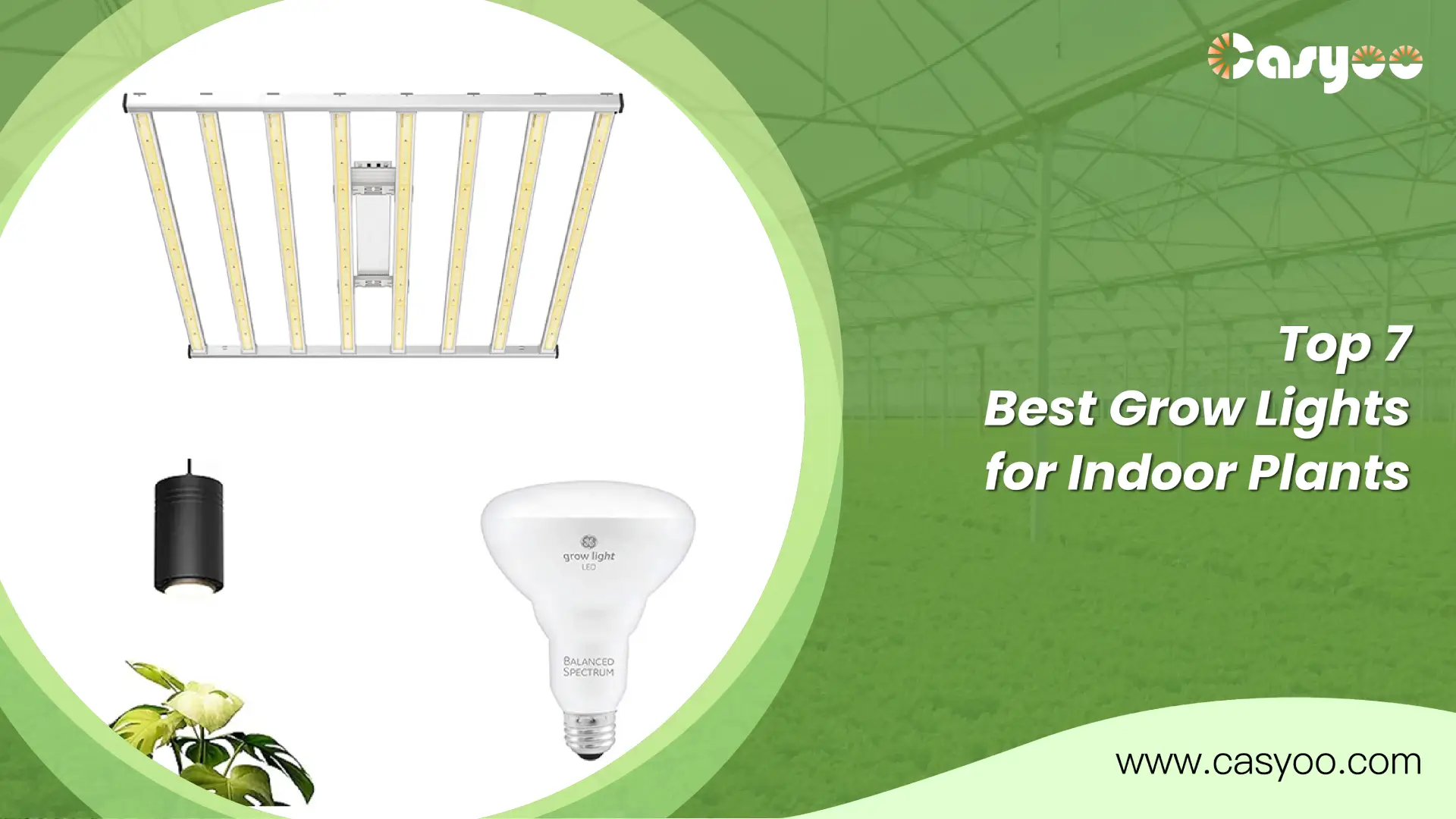
Owning plants inside your home proves challenging when you need them to survive? Plant enthusiasts commonly deal with insufficient natural lighting which makes your situation common. Whether you’re growing herbs on your kitchen counter or managing a small commercial grow room, the right LED grow light can make all the difference.Choosing the right LED grow lights for indoor plants isn’t just about brightness—it’s about spectrum, PPFD, coverage, and long-term reliability. In this latest buyer’s guide, we compare seven proven options for homes, vertical farms, and greenhouses, then show how to match spectrum and intensity to your crops. And for commercial or OEM buyers, we’ll also show how Casyoo’s custom LED grow light manufacturing lets you build tailor-made fixtures for your own brand, vertical farm, or greenhouse project.
Quick Overview: Top Picks by 2026
| Category | Best Model | Key Features |
| Best for Home Décor | Soltech Grow Light | Elegant pendant design, full spectrum, natural look |
| Best for Small Plants | GE Grow Light Bulb | Simple bulb format, easy installation |
| Best Budget Choice | Leoter 80W 4-Head Grow Light | Flexible gooseneck arms, timer, adjustable brightness |
| Best for Smart Hydroponics | AeroGarden Harvest Light | Integrated hydroponic system, automatic light cycles |
| Best for Vegetables | SANSI 24W Full Spectrum Grow Light | Ceramic LED tech, high PPFD for leafy greens |
| Best Dual-Head Option | LBW 30W LED Grow Light | Clamp-on design, adjustable heads |
| Best for OEM/B2B Projects | Casyoo SP005 800W multi-bar Grow Light | Industrial-grade LED board, customizable OEM/ODM service |
Top 7 Best Grow Lights for Indoor Plants
Growing light selection needs to focus on plant enthusiast priority features including price, power output, PPF, spectrum availability and other influential aspects. The following comparison examines principal benefits and disadvantages of each product together with its exclusive characteristics to aid your selection process.
1. Soltech Grow Light
| Price | $200 (40 W, at Amazon) |
| Specifications | -Full spectrum -PPF: 42 μmol/sec -Mounting Style: Pendant mount -Best for plants: Aloe, aralia, cacti, succulents (High light plants) |
| Pros | 1.Elegant, modern design 2.Energy-efficient 3.Programmable lighting for easy control |
| Cons | 1.Higher price compared to standard grow lights 2.Suited for medium to large spaces with high light requirements (24″-36″ coverage) |
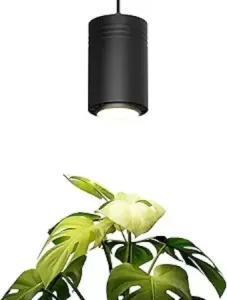
The Soltech Grow Lights stand out as high-end products among standard market grow lights since they merge sophisticated aesthetics with efficient functionality. Their pony pendant design makes them align well with the current demands of residential and business spaces. The elevated price point gives Soltech Grow Lights the capability to generate 42 μmol/sec of photosynthetic photon flux which exceeds the PPF provided by GE Grow Lights (9W) and Leoter Grow Lights (80W). The Sunset Spectrum along with programmable light control allows Soltech Grow Lights to deliver a smart and natural lighting environment through their advanced features.
Soltech Grow Lights operate as suspended fixtures that require a placement distance of 24 to 36 inches above plants for illuminating spaces measuring between medium and large sizes. High-light plants including succulents, aloe vera and cacti find their ideal growing conditions when cultivated under Soltech Grow Lights. Some users also incorporate them into indoor gardens or plant display areas. People seeking high-quality grow lights coupled with stylish aesthetics will find Soltech Grow Lights as an outstanding option for establishing perfect plant-growing environments.
- Real Customer Reviews
- “The light is perfect for my indoor garden, and my plants have never looked better.”
- “Sleek design that blends well with my home decor while providing excellent plant growth.”
- “Easy to install, and the timer feature makes it super convenient to manage light cycles.”
2. GE Grow Light
| Price | $17.79 (9 W, at Amazon) |
| Specifications | -Full spectrum -PPF: 16 μmol/sec -Mounting Style: Bulb (E26 Base) -Best for plants: Seeds, greens, tomatoes, peppers, leafy greens, herbs |
| Pros | 1.Budget-friendly 2.Simple and sleek design 3.Easy to install with E26 base |
| Cons | 1.Lower efficiency compared to premium grow lights 2.Lacks advanced features |
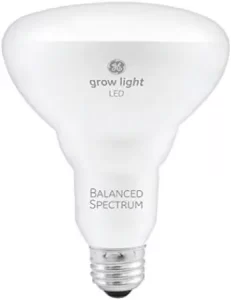
Beginners in indoor plant cultivation can benefit from GE grow lights as their solution. While this plant light offers relatively low power and a modest PPF, it is highly cost-effective. If your planting space is small, this light will be sufficient for your needs.
A bulb design with an E26 base enables easy installation through simple bulb screwing. Its small dimensions allow this lamp to fit in different settings including kitchens along with apartments and home offices.
This basic plant lamp covers all fundamental plant lighting needs but does not include more advanced functions such as intensity adjustment. The lamp works best for cultivating herbs together with green leafy vegetables and small vegetable crops.
- Real Customer Reviews
- “Great light for my indoor herbs, they’ve grown noticeably faster.”
- “Affordable and energy-efficient, no noticeable increase in my electric bill.”
- “The natural light it provides makes it easy to care for my plants and spot any issues.”
3. Leoter Grow Light
| Price | $20.39 (80 W, at Amazon) |
| Specifications | -Full spectrum, Red+Blue Spectrum -Mounting Style: Clip-on -Best for plants: Indoor vegetables, seedlings, herbs |
| Pros | 1.Timer for convenience 2.Rich features |
| Cons | 1.Limited coverage area |
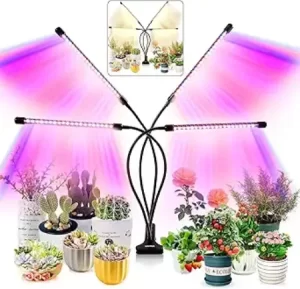
The Leoter grow light represents an advanced solution for small spaces because it offers adjustable gooseneck support attachment points that allow users to easily control lighting angles. This lamp provides three adjustable light spectrums which enable growers to enhance plant growth through optimal illumination at every developmental stage. The built-in timers and dimming features of this product provide growers with enhanced control mechanisms.
The Leoter grow light provides multiple illumination features but restricts its operation to small plant cultivation settings because its PPF performance remains low. Novice gardeners who want to enhance their plant illumination systems can find this lamp as one of the best grow lights for indoor plants.
- Real Customer Reviews
- “The timer feature is super convenient, and I love how easy it is to set up.”
- “My plants have been thriving, and the adjustable gooseneck makes positioning a breeze.”
- “Bright, energy-efficient, and affordable—definitely a great value for indoor gardening.”
4. AeroGarden Grow Light
| Price | $77.65 (15 W, at Amazon) |
| Specifications | -Full spectrum, white, warm, cool -Mounting Style: Tabletop -Best for plants: Small indoor plants, kitchen herbs, and seedlings |
| Pros | 1.High-tech features (automated system, smart controls) 2.Compact and easy to use 3.Ideal for small spaces |
| Cons | 1.Expensive compared to other options 2.Limited coverage area |
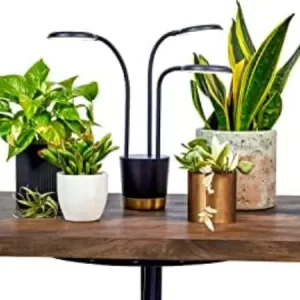
AeroGarden grow light stands out with its smart features as an outstanding lamp suitable for compact growing areas. This lamp enables automated timing controls for lights and lets users operate it remotely which brings users superior convenience.
In terms of functionality and installation, it performs on par with other grow lights. The lamp delivers complete spectrum light distribution with its compact countertop setup and features an adjustable holding arm.
The lamp has two main limitations which include high cost and low power generation capability that restrict its use for plants shorter than 12 inches but include herbs and seedlings and low-growing vegetables. The system provides useful lighting benefits to indoor growers who need quick and easy solutions.
- Real User Reviews:
- “The adjustable arms are great for customizing light coverage for different plants.”
- “I love the remote control and app integration for easy operation.”
- “It’s perfect for my small space but a bit pricey for the features.”
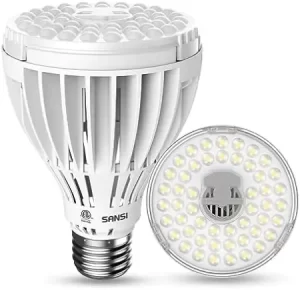
5. SANSI Grow Light
| Price | $20.21 (24 W, at Amazon) |
| Specifications | -Full spectrum (4000K Daylight) -PPF: 36.2 μmol/sec -Mounting Style: Bulb (E26 Base) -Best for plants: Flowering plants, vegetables, and general indoor plant growth |
| Pros | 1.High efficiency 2.Patented COC technology 3.Affordable compared to high-end options |
| Cons | 1.Limited adjustability in terms of light direction 2.Not ideal for larger plant setups |
The SANSI grow light is renowned for its performance. This grow light heads the price-efficient and durable segments of equipment available for small growing areas. One can acquire this lighting equipment for $20 which delivers efficient illumination through 24W with a PPF of 36.2 μmol/sec. The product’s longevity extends from the exclusive COC technology developed by SANSI which leads to extended durability.
However, its main limitation is the fixed light direction due to its bulb-style installation, which cannot be adjusted. As a result, this grow light is commonly used for providing focused lighting to indoor flowers, vegetables, and general plants within small areas. The SANSI grow light provides great value to shoppers concerned with affordable solutions.
- Real User Reviews:
- “Great for small plants and indoor gardens; the light quality is excellent.”
- “My plants thrive under these lights, and they germinate faster.”
- “Well-built and efficient, though I wish the direction of the light could be adjusted more easily.”
6. LBW Grow Light
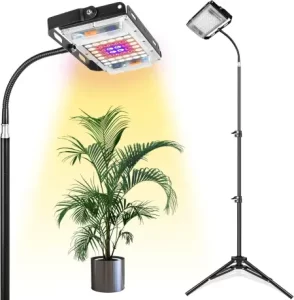
| Price | $23.99 (30 W, at Amazon) |
| Specifications | -Full Spectrum (390nm–730nm, White 3500K & 6500K, Red & Blue) -Mounting Style: Adjustable tripod (freestanding) -Best for plants: Seedlings, herbs, flowers, vegetables, tropical plants |
| Pros | 1.Inexpensive 2.Simple setup and adjustable height |
| Cons | 1.Limited spectrum compared to high-end options |
The LBW grow light distinguishes itself with its adjustable tripod setup that allows users to match the height for plants found in limited spaces. Additionally, it is an affordable and energy-efficient option.
The LBW model falls behind advanced grow lights because it comes without extensive dimming capabilities. However, it performs well for seedlings, herbs, and small flowers. If you value the LBW’s design, it could be a solid option for your plant care needs.
- Real User Reviews:
- “Great price for a quality grow light, my plants love it!”
- “Perfect for growing my herbs; the adjustable height makes it versatile.”
- “Very easy setup, but the light fixture is a bit flimsy.”
7. Casyoo Grow Light MK-800
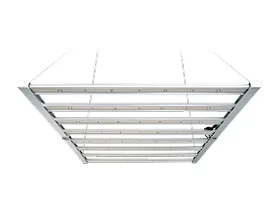
| Specifications | -Full Spectrum -Mounting Style: Hanging -Dimming (1–10V, 10%–100%), Passive cooling, Daisy-chain function -Best for plants: All stages of plant growth, from seedlings/clones to flowering |
| Pros | Energy-efficient (up to 2.8 μmol/J), helps reduce operating costs High power (800W) and strong PPFD for large-scale grow spaces |
| Cons | Higher price compared to entry-level/budget grow lights |
Most grow lights are built for small tents, but the Casyoo SP005 800W Multi-Bar LED Grow Light is designed for commercial-scale cultivation. With a 1100 × 1100 mm multi-bar layout, it delivers broad, even canopy coverage and high intensity—reaching 1,127 μmol/m²/s at 60 cm (and up to 1,770 μmol/m²/s at 30 cm) for demanding grow rooms, vertical farms, and greenhouse supplemental lighting.
Beyond output, SP005 focuses on controllability and reliability. The fixture uses a full-spectrum blend with Samsung LM301B + Osram 660nm, supports 1–10V dimming (10%–100%), and is powered by dual Meanwell drivers for stable long-term operation. With IP67 protection and a 54,000+ hour rated lifetime, it is a practical option for growers who need a high-performance light that adapts across growth stages and withstands humid environments.
- Real User Reviews:
- “This light noticeably improved canopy uniformity and overall plant vigor.”
- “Installation was straightforward, and dimming control is extremely helpful.”
- “Great output for flowering—plants responded quickly and stayed consistent.”
How to Choose Best Grow Lights for Indoor Plants Checklist
To select the most suitable LED grow lights for indoor plants, follow this easy-purchase checklist.
- Spectrum:
- Full Spectrum = Best for all plant stages.
- Red/Blue Spectrum = Ideal for specific growth stages (blue for vegetative, red for flowering).
- Plant Types:
- Herbs & leafy greens = Moderate light intensity.
- Flowering/fruiting plants = Stronger, red-rich light.
- Succulents & cacti = High-intensity light.
- Growth Stage:
- Seedling: Low-intensity, blue spectrum light.
- Vegetative: Moderate light, full spectrum.
- Flowering/Fruiting: High-intensity, red-rich light.
- Coverage Area:
- Small space = Lower power lights (GE, LBW).
- Larger space = Higher power lights (Casyoo, Soltech).
- Efficiency:
Select lighting fixtures that feature high PPF values since they deliver peak efficiency levels.
- Indoor Environment:
- Small space & cooler temp = Low heat, energy-efficient lights.
- Larger space & warmer conditions = High-power, cool-running LED lights.
- Installation:
Easy-to-install: Clip-on, standing, or hanging designs (e.g., AeroGarden).
For B2B Buyers: Casyoo OEM/ODM Solutions
Casyoo provides end-to-end LED grow light manufacturing, from design to certification.
- Custom LED Boards: Choose diode types (Samsung LM301B, Osram 660 nm) and spectrum mix.
- Driver & Control Options: 0–10 V dimming, Zigbee, LoRa, or Wi-Fi connectivity.
- Testing & Reliability: AOI, X-Ray, aging tests for consistent quality.
- Compliance: CE, UL, RoHS, ISO9001 certified factory.
Frequently Asked Questions
- Should you leave your grow lights on all the time?
No, plants follow similar rest cycles to human beings for their biological functioning. The majority of plants require daily light exposure periods of 12 to 16 hours followed by dark time to mimic normal daylight patterns. The proper distribution of light and dark periods enables plants to carry out nutrient absorption and growth control processes.
- Are all LED lights suitable for being usedas grow lights?
Not all LED lights are created for growing plants. Regular LEDs don’t typically provide the correct spectrum needed for plant growth. Search for LEDs which have been specifically designed for plant cultivation either with a full spectrum or red and blue wavelength coverage.
- How close to plants should grow lights be?
Setting the correct distance between plant and lighting equipment determines how well your plants will grow. LED lights should be maintained at positions that range from 6 to 18 inches above the plants with lighting intensity determining the precise placement.
Related reading