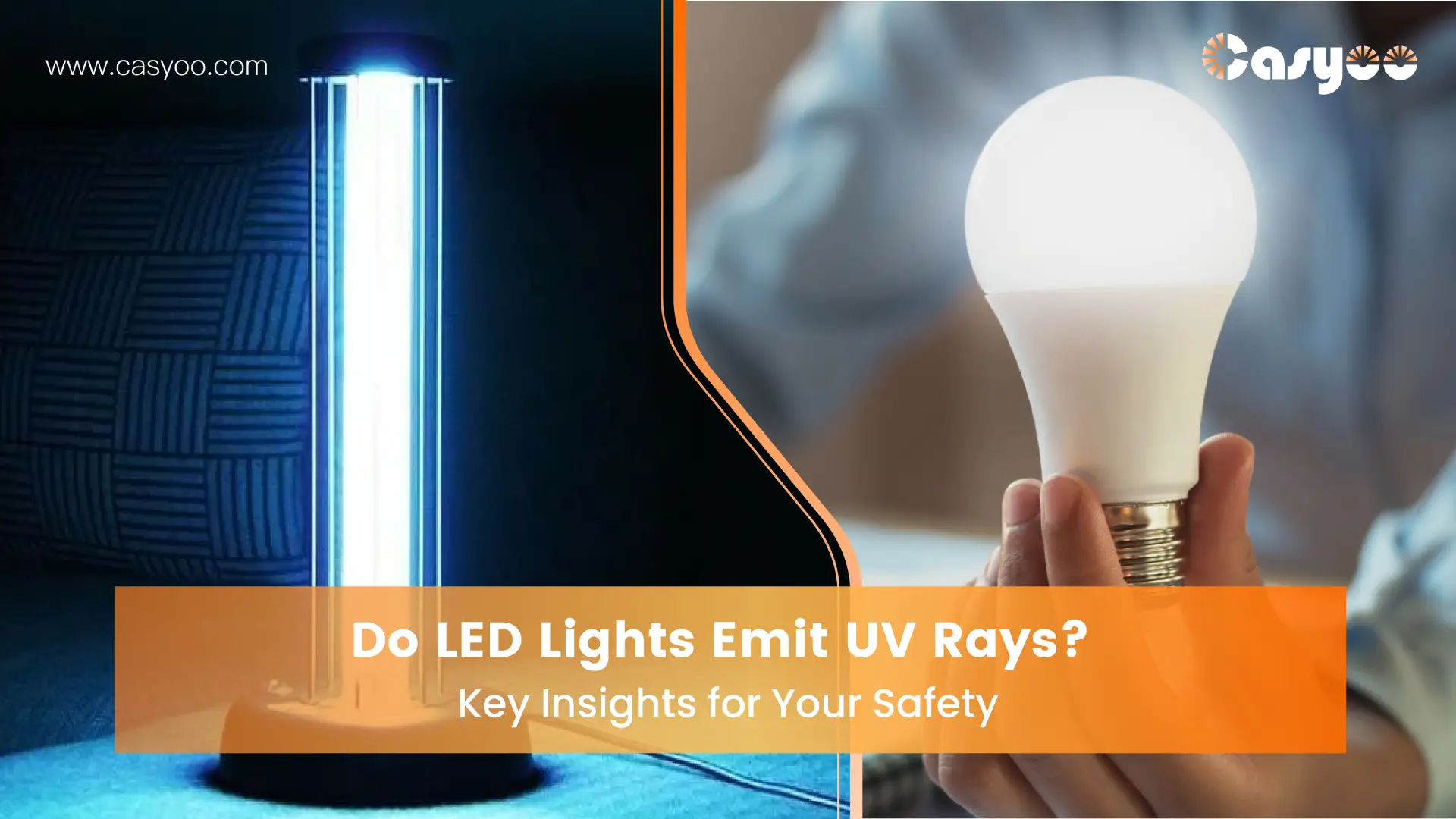
It’s likely that you have questioned the safety of the LED lights in your house or place of business. After all, there are numerous worries regarding UV radiation and its possible health effects. As an experienced LED lighting engineer, I can state with confidence that LED lights typically release little to no UV radiation. LEDs are among the safest and most energy-efficient solutions on the market today, in contrast to outdated technologies like fluorescent or halogen lights. To give you the confidence you need when making lighting decisions, we’ll examine the facts about LED light and how they stack up against conventional lighting in this post. Let’s get started.
Health and Skin Concerns: How UV Radiation Affects You
The possible negative effects of UV radiation on human health, especially with regard to the skin and eyes, are among the primary worries. Long-term exposure to UVB and UVC rays can cause sunburn, skin aging, and an elevated risk of skin cancer, among other health problems. Even while UVA radiation is not as strong as UVB, it can eventually cause DNA damage in skin cells and skin aging. UV rays can also harm the eyes, resulting in diseases including macular degeneration and cataracts.
Fortunately, the use of LED lights for general lighting, whether in an office or at home, does not provide a serious health risk.
However, it’s crucial to adhere to the proper safety precautions if you work in an industry that requires UV LEDs or UVC lamps (such as in specific industrial, medical, or sterilization settings). If the radiation control is improper, the UV light can be very harmful.
How to Know if the UV Emission from Your Light is Safe?
The first step is to refer to the product guidelines or packaging. The credible lighting manufacturers usually spell out clearly the photobiological safety standards they adhere to. Search IEC 62471 or its European equivalent: EN 62471. If not, confirm that the lamp you purchased has regional certifications, such as the EU’s CE mark or North America’s UL mark, as photobiological safety standards are mandatory.
If you want to test it yourself, you can purchase a UV test card. Hold the card under light for a few seconds and observe the color change of the photosensitive coating on the card. It will typically change from white to varying shades of purple depending on the UV intensity. It should be noted that this mechanism can only offer a qualitative or semi-quantitative UV light measurement and that the card will progressively lose its effectiveness with exposure to sunlight.
Do LED Lights Emit UV Rays?
UV radiation from standard LED lights is negligible to nonexistent. LEDs employ semiconductors to directly create light in the visible spectrum with almost minimal UV emission, in contrast to conventional light sources like fluorescent or halogen bulbs. They are therefore a safer option for frequent use.
Types of LED Lights and UV Emissions
- White LEDs: Most prevalent, with minimal UV emission. They generate white light, which is free of dangerous UV rays, using a blue LED chip coated with phosphor.
- Blue and Colored LEDs: With a tiny, but still negligible, UV component, blue LEDs emit mostly blue light. Red and green LEDs produce even less UV light—nearly none at all.
LED Color Temperature and UV Output
UV emissions can be affected by an LED light’s color temperature, which is expressed in Kelvins:
- Warm White LEDs (around 2700K): Almost no UV radiation is produced, and the light is soft and yellowish.
- Cool White LEDs (5000K and above): Emit more bluish, brighter light with a somewhat higher UV output, however this is still very low and won’t pose a health risk in normal situations.
Are LED Grow Lights Different?
LED grow lights emit UV radiation to help plant growth. For plant usage, the amount and wavelength of light are especially designed. You cannot take these UV LEDs as regular office or home LEDs.
LED vs. Other Light Sources in Terms of UV Emissions
Let’s compare LED lights to other typical light sources to see how low their UV emissions are:
- Fluorescent Lights: Fluorescent lamps generate more UV radiation than LED lights. Even though these lamps use phosphor coatings to turn UV photons into visible light, some still manage to get through, particularly if the lamp is old or broken. An increased risk of skin damage and other health problems might result from prolonged exposure to UV light from fluorescent lights.
- Halogen Lamps: Compared to conventional light bulbs, halogen lights run at greater temperatures and emit more UV light. These lights are less appropriate for delicate settings or locations where UV radiation is an issue because they frequently need UV filters to lower exposure.
- Metal Halide Lamps (HID): Particularly as they get older, HID lights—including metal halide lamps—emit a lot of UV light. There lamps need additional UV filters in order to reduce the hazards of extended exposure.
Standard LED lights, on the other hand, even when used for prolonged periods of time, emit significantly less UV radiation. LEDs are significantly safer than conventional lighting sources like fluorescent and halogen bulbs for general lighting applications. You can refer to the spectrum comparison below, incandescent lamps emit a lot of UV light (in the band below 400nm), fluorescent lamps and halogen lamps emit a small amount of UV light, and LED lamps emit the least UV light.

Special Use Cases: UV LED Lights
There are several applications where UV LEDs produce controlled levels of UV light, while the majority of regular LED lights emit little to no UV radiation. These UV LED lights have specific uses in particular industries and are not for general lighting. Let’s examine these UV LED uses in more detail:
- UV-A LED Lights: These LEDs are frequently utilized in insect traps, some sterilizing procedures, and plant development (e.g., LED grow lights). By simulating natural sunlight, UV-A radiation promotes healthy plant growth without releasing dangerously high UV levels. To guarantee that the radiation levels are safe for the environment and the plants, there are meticulous regulation.
- UV-B LED Lights: UV-B LEDs are utilized in certain industrial and scientific applications, while being less frequent. People often use them for therapeutic illumination for certain skin disorders or specialized plant care. UV-B LEDs emit more radiation than UV-A LEDs, so they work in applications with exposure control systems in place.
- UVC LED Lights: Sterilization and disinfection are two uses for these LEDs. UVC LEDs are frequently found in air sanitizers, water purification systems, and sterilization units for medical equipment. This is because UVC radiation is strong and efficient at eliminating germs and viruses. However, UVC LEDs are carefully regulated and utilized in closed systems. Since they can harm our body, it is better to avoid the direct exposure to UVC radiation while using.
Although UV LED lights are useful in some applications, they are not used for general lighting. Because of the low UV emissions, ordinary LED lights are safe for use in daily environments.
Misconceptions About Blue Light and UV Radiation
Blue light and UV radiation are frequently confused, particularly when talking about LED lights. Cooler color temperature LEDs (such as those in the 5000K range or higher) emit blue light, which can disrupt sleep cycles and strain the eyes. But blue light and UV radiation are not the same thing.
Blue light belongs to visible light, and is less damaging to the skin and eyes than UV radiation. Sunburn, skin cancer, and other long-term damage can be caused by UV radiation, but blue light cannot penetrate the skin deeply enough to do so.
Nevertheless, extended exposure to blue light, especially at night, might interfere with the body’s circadian clock and cause sleep disturbances. Making the move to warm white LEDs, which emit substantially less blue light and are friendlier on the eyes, is one way to address blue light concerns, particularly in spaces like offices or bedrooms.
For the majority of people, controlling blue light exposure during prolonged screen time or evening hours should be the main health concern rather than UV radiation. You can improve the quality of your sleep and lessen eye strain by altering the lighting you use.
Rethinking the Need for UV Concerns in LED Lighting
In actuality, LED lights typically release virtually no UV radiation at all. LEDs are a lot safer and more dependable option than outdated technologies like fluorescent or halogen lights, which are notorious for their greater UV emissions. Specialist UV LED lights that work for special applications are not likely to affect consumers.
Therefore, why stick with antiquated, UV-emitting lighting when LED technology provides a more effective and safe substitute? In addition to avoiding dangerous radiation, LED lights provide energy efficiency, a longer lifespan, and a smaller environmental effect.
This is the ideal moment if you’re still unsure about making the switch to LED lights. Get in touch with us right now to learn more about our selection of LED lighting options where we keep sustainability and your safety in mind. To find out more, go to our website.