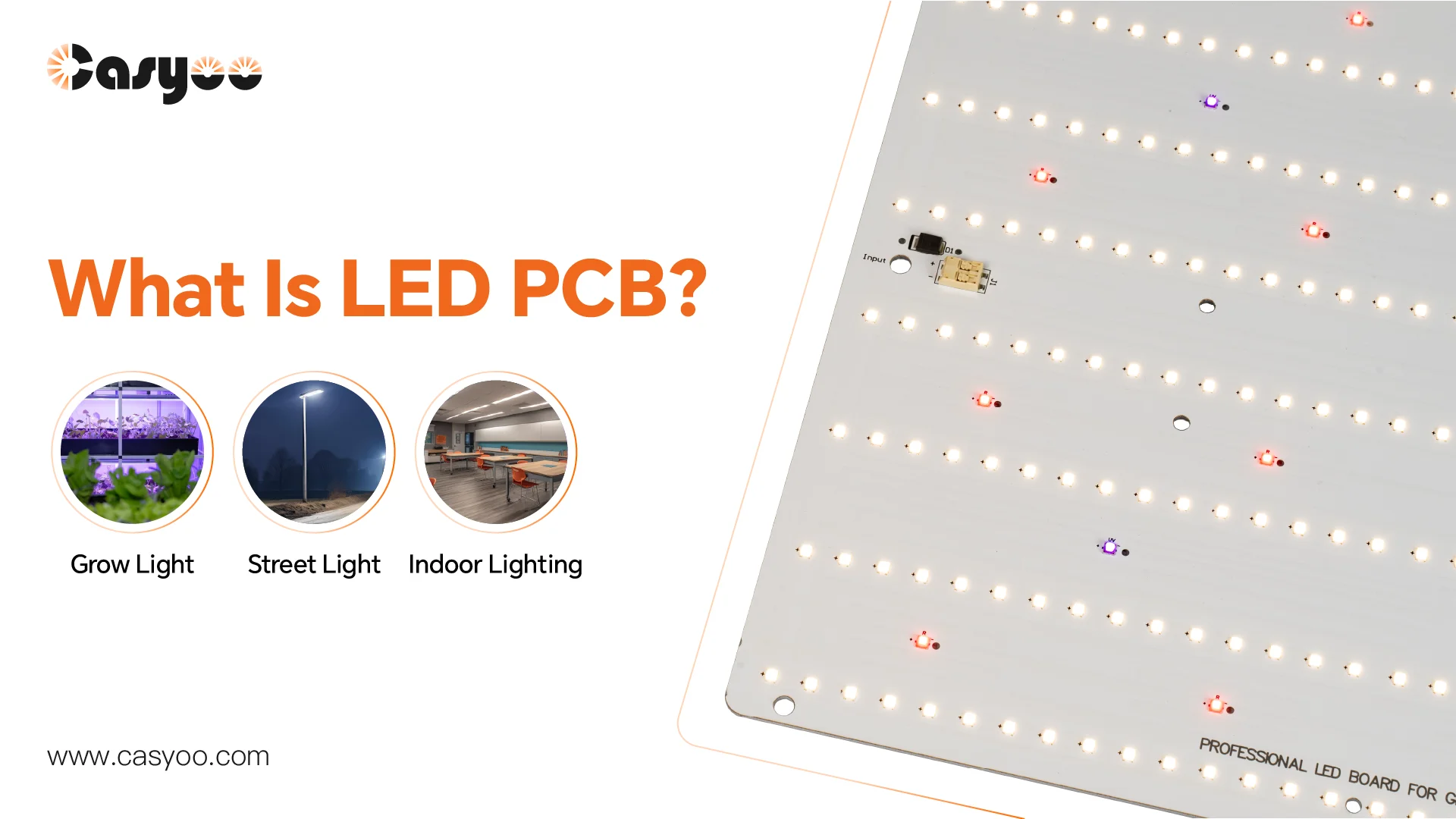
What is LED PCB? An LED PCB is a printed circuit board that is specifically designed to be used in LED lighting fixtures. It is used to mount and connect LED components with electrical circuitry, and distribute power as well as provide mechanical support. It is not like standard PCBs. LED will produce heat when it is in operation. Thus, LED PCBs require special concern regarding thermal management, substrate material choice, and layout stability. They normally use a metal-core structure to achieve good heat dissipation. These distinctions guarantee the LED PCB with a consistent operation of the device and increase the service life of the product.
LED lighting products need more than a simple circuit board. In many designs, the PCB must not only provide electrical connection for LEDs and drivers, but also help manage heat, support reliability, and fit the mechanical structure of the product. That is why LED PCB has become a core part of modern lighting design. High-power LED systems, in particular, require careful power delivery and thermal planning to maintain safe temperature rise and long-term reliability. In this article, we will mainly talk about what is LED PCB—its types, structures, strengths and limitations, and applications.
What is LED PCB?
LED PCB Definition
An LED PCB is a printed circuit board on which LED components can be mounted and electrical pathways formed that enable the components to function as a part of a lighting system. In practical designs, the board usually works with the driver, copper circuitry, thermal pads, vias and even the product housing to ensure the LEDs operate within a reasonable temperature zone.
Why LEDs Need a Special PCB
The thermal demand is what distinguishes LED PCB from a standard PCB. The primary design consideration in a standard PCB can be electrical routing and mechanical fit, whereas an LED PCB often needs rapid heat dissipation from the active components. Material used as the substrate, copper distribution, thermal path and the overall stackup all affect how heat spreads within the board and the stability of the LEDs with time.
This is also why LED PCB design is more challenging as the power increases. From the lessons of LED PCB design that we wrote in our early days, the high-power LED boards require a constant power supply and low-temperature working conditions, and the layout becomes a significant factor of reliability and risk of board failure.
Basic Structure of an LED PCB
Although the structure of LED PCB designs can be tailored to the requirements of each specific application, the majority of these designs follow a common structure with a few major components: the LED components, copper circuitry layers for electrical conduction, insulating or dielectric layers in a particular configuration, and substrate material that supports the structure and conducts heat.
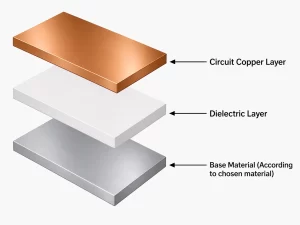
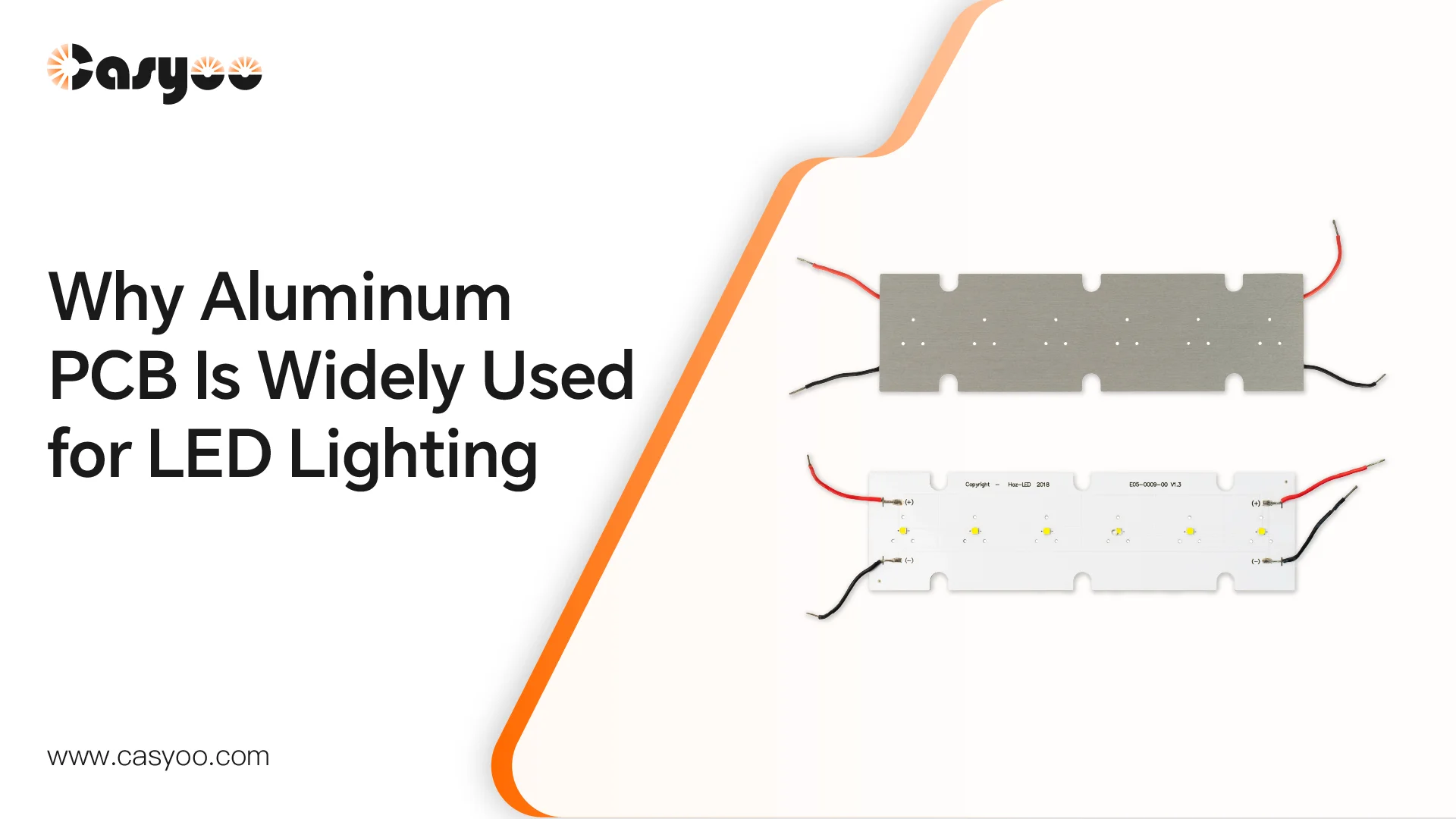
The configuration in a case of metal-core or insulated metal substrate PCBs is usually composed of a top plate of copper foil, a thin dielectric layer located between the plates, and a metal substrate at the base. Aluminum is an ideal material to use as the metal substrate of such circuit boards because it provides the best trade-off between thermal dissipation, manufacturability and cost-effectiveness, thus making it most commonly used in LED lighting applications.
Moreover, besides the main conductive and structural layers, efficient LED PCB design cannot be complete without solder mask, proper surface finishing treatments and a detailed plan on thermal management and heat dissipation routes. With actual products, heat has to flow effectively out of the LED package into copper, the substrate, and on to the housing or heatsink. Common components of that heat-transfer path are thermal pads, copper areas, and thermal vias.
Main Types of LED PCB
The types of LED PCBs vary depending on board structures, material types, and intended applications. Below, I will classify them based on these two criteria: board structures and material types.
By Board Structure
- Single-sided LED PCB
- Double-sided LED PCB
- Multilayer LED PCB
One of the simplest types is single-sided LED PCB. Its use is in relatively simple and cost-sensitive lighting products. The components and traces are arranged on one side of the board.
In double-sided LED PCBs, circuits or components are placed on both sides, providing more routing flexibility to the designer when the product requires more functions or higher density. The inflexible-board design paradigm of IPC is indicative of the increasing significance of board structure with circuit complexity.
Multilayer LED PCB is utilized in cases where the design requires additional routing space, enhanced power distribution or embedded control circuitry. In more sophisticated LED, systems that ensure constant power delivery and reduced losses gain importance, and thus multilayer structures are more applicable.
By Substrate or Material Form
Here are 4 main types of LED PCBs commonly used in lighting base on the substrate or material form:
- Aluminum LED PCB
- Copper LED PCB
- Ceramic LED PCB
- FR-4 LED PCB

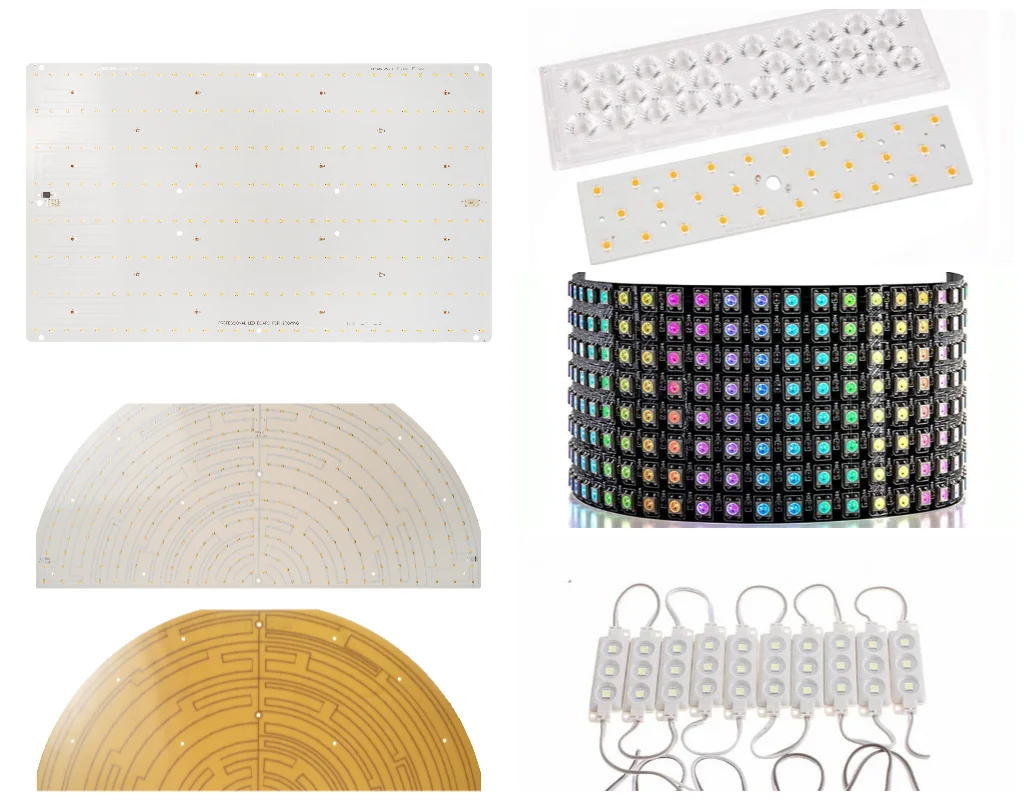
Aluminum-based LED PCBs are the most common option on the market. They have high thermal conductivity and are thus quite efficient in cooling off heat to the LEDs. Aluminum MCPCBs are also more cost-effective and comparatively easy to fabricate. They are suitable for general lighting, commercial lighting and consumer electronics.
Compared to aluminum-made LED PCBs, copper LED PCBs have better thermal dissipation (greater thermal conductivity), can withstand higher power density, and operate at more extreme temperatures. Copper is, however, more expensive and more difficult to process. It is usually applied in high power LEDs, industrial lighting and in applications that might require high temperature regulation.
Ceramic LED PCBs are highly thermal resistant, with an excellent electrical insulation discourse and temperature resistance. They are efficient in harsh environments and are generally employed in automotive, medical equipment, and high-reliability electronics. Their primary drawbacks are their higher price and the fact that it is a more complicated production.
FR-4 LED PCBs are made out of standard fiberglass materials. They can only be used in low-power LED applications, i.e., indicator lights or small decorative LED lamps. Poor thermal dissipation behavior of FR-4 means it should not be used in high-brightness or high-power LED designs.
Strengths and Limitations of LED PCBs
It is crucial to know the strengths and limitations of LED PCBs to make the right choice in the design and procurement. Below, we will discuss the key strengths that make LED PCBs a better choice in modern lighting applications, and the limitations to consider by engineers and purchasers.
Key Advantages of LED PCB
One advantage we’ve mentioned many times is its superior heat dissipation. This performance helps LEDs achieve more stable light output and a longer lifespan. We won’t elaborate on this further.
Another advantage lies in its design flexibility. Depending on the specific application requirements, LED PCBs can be manufactured using different structures and materials. Customers also have different power ratings, installation space, and heat dissipation needs. Its design flexibility can meet these requirements, making it suitable for everything from simple general-purpose lamps to advanced intelligent lighting systems.
Limitations of LED PCBs
There are also limitations of LED PCBs. The biggest challenge is heat issue in high-power applications. If the board material or layout is inappropriate, excess heat may reduce performance and shorten product life. There are also higher-performance materials that can increase manufacturing costs.
Moreover, not all types of LED PCBs can be used in any application. The incorrect substrate or board structure can result in unnecessary cost, ineffective thermal performance or assembly challenges.
How to Avoid Common Design Problems
In order to prevent such typical problems with LED PCBs, we should consider the choice of the right material, copper weight, and board structure to use. Assembly quality should also be taken into consideration by designers as poor solder paste control may lead to cracked joints, short circuits, or open circuits. Moreover, protecting the board from moisture, oxidation, and contamination can help improve long-term reliability, and electrical tests can be used to detect faults before final use.
Common Applications of LED PCB
The application of LED PCBs is very diverse in lighting and display devices since they provide a single solution that integrates electrical and structural connections and thermal control. In lighting systems like grow lights, street lights, and indoor lighting, the PCB has to allow the stable performance of the LEDs, effective heat-dissipation, and layout to fit the product structure. The board also has various demands in different lighting environments. For example, the high power use in the outdoors or compact indoor fixtures with a tight space and cost constraint.
Traffic and signal lights, industrial lighting and medical lighting also use LED PCBs. And in these applications, reliability is very important. Long operating hours, constant brightness, and reliable electrical performance over more stringent conditions are features that are frequently required during the board design in these applications. In products with a controlled or customized environment, the PCB could also be required to have greater stability, accuracy, and uniformity of products.
Beyond general lighting, LED PCBs are often used in LED backlights and custom LED modules. Backlight uses are usually thin and need uniform light output whereas custom LED modules are also created to meet particular thermal, electrical or mechanical requirements. This is one of the key motives why LED PCB technology is applied in such a wide range of products.
What to Keep in Mind When Choosing an LED PCB
A right LED PCB is more than just the look of it, whether in grow lights, street lights, indoor lighting or custom LED modules. All these aspects of structure, material, heat management, and application contribute to overall performance. By knowing these basics, it will be much simpler to compare the various LED PCBs and select the appropriate solution for your project.
In order to simplify the navigation of this topic, the following are some of the most common questions regarding LED PCB design, material and application.
FAQ about LED PCBs
Where can I find surface-mount LED PCB boards?
Surface-mount LED PCB boards can be sourced from manufacturers that provide custom PCB fabrication and assembly for lighting products. If you need boards for applications such as grow lights, street lights, indoor lighting, or custom LED modules, it is best to work with a supplier that can support both PCB design and SMT assembly based on your project requirements. Then that should be us — Casyoo. Contact us for design support, prototyping, and PCB assembly service.
How to make LED PCB board?
The process of making an LED PCB board typically involves determining the circuit design, LED placement, thermal considerations and PCB material. When the design is finalised, the LED board is manufactured, populated with LEDs and other components by SMT, and finally tested for electrical functionality and reliability. You can read our LED PCB manufacturing article for more information on the entire manufacturing process.
Which PCB material is best for LED applications?
No single material is most suitable for all LED applications. The right choice should be based on power, thermal requirements, product design, and cost. Aluminum PCB is common because it has a good balance between thermal and cost requirements, but FR-4 may be suitable for low-power applications and ceramic may be a better choice in the case of higher thermal demands.