Have you ever wondered how tens of thousands of street lights in a city can consistently and reliably illuminate the streets? The answer is much more than replacing bulbs. Advanced street light maintenance is a high-tech technology consists of mechanical engineering, smart sensing, and information analysis. Read the article below to learn how street lamp maintenance ensures stable lighting and efficient troubleshooting.
Causes of Street Light Failures
Hardware Aging and Design Defects
The average life of the traditional HPS lamp is only 15,000-24,000 hours compared to LED street lights, which means that they need to be replaced frequently. Even the longer-lasting LED modules, though, are subject to inherent shortcomings like driver failure and insufficient heat dissipation. These units frequently employ antiquated series circuitry designs, and a fault in a single bulb can incapacitate an entire line. To make a bad situation worse, a number of cities continues to utilize cable networks installed 30 years ago, so aging is hard to visually identify.
Low Maintenance Efficiency
The current mainstream “report-and-response” mechanism suffers from significant lags. Sometimes street nameplate changes or pole numbers may be obscured by trees. So it’s common for maintenance personnel to take an average of 48 hours to locate a faulty street light. A reactive model of administration based on complaints by citizens means for a long time faulty lamps remain undetected.
Street Light Maintenance Methods
In addition to repairing street lights after they fail, municipal lighting maintenance also includes measures to prevent them. With advanced technologies, preventing problems has become easier, predicting them more accurately, and repairing them faster.
Scheduled Preventive Maintenance
street lights require regular, planned inspections and maintenance. These include cleaning the lamp housing to prevent dust and contaminants from affecting light efficiency, checking cables and terminals for loose connections, promptly replacing aging light sources or LED modules, and inspecting pole stability and bolts for looseness. Lots of cities have regular roadway lighting maintenance schedules, including three-month visual and electrical checks and yearly full maintenance.
Smart Street Light Predictive Maintenance Systems
With the widespread application of IoT, big data, and smart sensors, predictive smart street lighting maintenance has become a key focus. Such a system equips street lights or control boxes with current, voltage, illuminance, and temperature sensors. It can send real-time information to a distant administration platform for analysis and forecasting. When a street light’s working parameters show anomalies, an alarm will be sent to the maintenance staff.
Post-Failure Maintenance
When maintaining street lights after a fault, improving efficiency and resolving the problem as quickly as possible is paramount. Leveraging the Internet of Things, the maintenance personnel can find the fault type and location of the faulty street light accurately. Smart circuit breakers can typically distinguish between 11 fault types, such as a blown bulb and a short circuit. Maintenance personnel can quickly and accurately locate the street light in question after knowing GPS coordinates and roadside unit (RSU) numbers in the GIS system.
Maintenance Equipment, Tools, and Technologies
Mechanical Tools
During maintenance, maintenance personnel utilize bucket trucks to inspect and replace high-altitude lamps. Working heights range from a dozen to over 50 meters. Further, a few cities have started implementing drones for aided inspections, which allow for remote photography along with detection of damage, dust deposits, and even exposed cables on lamps.
Testing Instruments
Secondly, with LED and intelligent street lights increasingly in use, ordinary visual inspection is no longer up to standard, leading to a call for more advanced test tools. Representative examples are illuminance test meters and modules for monitoring electrical parameters, which are capable of real-time measurement of street light luminous decay, voltage, current and power consumption. Demonstration projects in some cities have developed intermittent illuminance test equipment. They automatically deploy probes on-site to collect illumination data, and then send it back to a monitoring platform via wireless communication.
NB-IoT or eMTC Modules
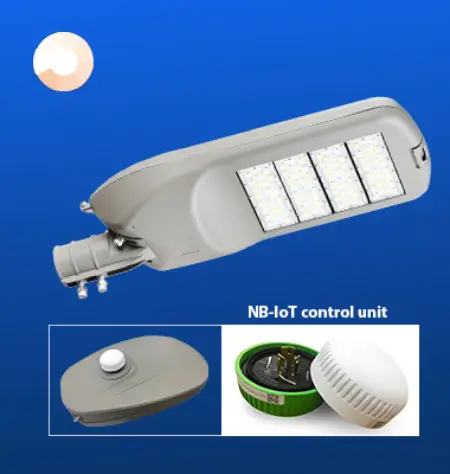
Powered by IoT technology, an increasing number of street lights are equipped with NB-IoT or eMTC modules, enabling the so-called “five remote” functions: telemetry, remote signaling, remote control, remote adjustment, and remote viewing. These modules are able to automatically report status of every street light, find faults real-time, and forecast possible danger using big data.
LED Street Light Maintenance Checklist
Determining the health of a street light requires more than just looking at whether it illuminates. Generally, a thorough inspection of street lights encompasses four dimensions; mechanical, optical, electrical and sealing.
Mechanical Structure Inspection
Lamp poles can corrode under the long-term influence of wind and rain, and foundations can roll on loose soil or poor quality of construction. Therefore, maintenance personnel should regularly inspect the integrity of the pole’s anti-corrosion coating, the foundation for signs of cracking or loosening, and perform torque checks on key bolts to prevent loosening due to long-term vibration or thermal expansion and contraction.
Optical System Inspection
Dust, aging of lens, and contamination may decrease light transmittance by a significant factor thus limiting lighting performance. In some heavily polluted cities or dusty areas, the luminous flux of a lamp can drop to 80% or even less after two or three years of use.
In addition to regular lens cleaning, it is also necessary to measure the actual light transmittance using a photometer and compare it to factory data to determine whether the lens needs replacement. More professional maintenance teams will also use equipment such as a goniophotometer to check whether the luminaire’s light distribution angle has changed due to internal component displacement or aging of the optical components, thereby preventing unpleasant glare or dark areas.
In-Depth Electrical System Inspection
In addition to checking for loose wires, several key components of a street light’s electrical system require regular and thorough inspection.
- Ground Resistance Testing: Adequate grounding is a prime requirement for electrical accident prevention for electric shocks. A ground resistance tester should invariably be employed such that the resistance value should meet safety standards.
- Insulation Resistance Testing: Using a megohmmeter (Megohmmeter) to test insulation resistance between cable, driver power input terminal in order to avert short circuit risk as well as leakage risk.
- Driver Output Monitoring: Monitoring output parameters with a multimeter or power analyzer in an effort to verify if they are within the rated range and stability in voltage and current.
Sealing Integrity Inspection
Street lights are often outdoors, and rain, dust, and even small insects can enter the lamp body through gaps. During inspections at the Electric Light Source Testing Center, a large number of street lights have failed IP protection tests. Therefore, during maintenance, special attention should be paid to whether the sealing ring material is aging, whether the lamp housing is deformed, and whether the IP rating still meets the standards. If necessary, maintenance personnel will perform simulated water spray or air pressure tests to verify the sealing performance.
Street Light Maintenance Case Studies
Over the past decade of urban lighting development, street light maintenance cases have fully demonstrated that relying solely on manual inspections cannot meet the management efficiency needs of modern cities. The maintenance and replacement of street lights in some cities also highlights the inevitable trend of transforming street light maintenance from traditional to intelligent models.
The “Smart Urban Management” project in Chongqing, China, is a typical example. In the past, the area’s more than 25,000 street lights relied on manual inspections, which was time-consuming and labor-intensive, and delayed problem detection. Since the installation of intelligent control terminals on more than 170 street light distribution boxes, managers can monitor voltage, current, and illuminance changes in real time through the platform and dispatch personnel immediately when the system issues fault alarms. This not only significantly shortens fault response time but also reduces operation and maintenance costs, ensuring a stable lighting rate of over 98%.
Another noteworthy case study is the application of NB-IoT technology. Some pilot cities are retrofitting traditional street lights with smart terminals equipped with telemetry, remote control, remote signaling, and remote viewing capabilities. These devices not only automatically adjust street light brightness based on sunlight and traffic flow, but also locate individual lamps and automatically carry out street light fault detection. For example, in some pilot projects, time-sharing power control reduces brightness to 50% during the quieter hours of midnight. In this way, it increases overall energy savings to over 70% and saves tens of millions of yuan in electricity bills annually.
Frequently Asked Questions
Who is responsible for street lighting and its maintenance?
This is typically the responsibility of the local government’s street light management department or municipal engineering department. Sometimes specialized power companies or third-party maintenance contractors can also be in charge of the routine maintenance.
How often do street lights burn out or need to be replaced?
Traditional street lights operate for an average of 4,000 hours per year (approximately 12 hours per day). LED street lights have a lifespan of 5-7 years. However, the actual replacement frequency is affected by voltage fluctuations, environmental factors, and other factors.
Why do street lights stop working or flicker on and off?
Luminaire failure (e.g. LED driver failure in street lights), extreme degradation of the light source, wiring/connector, control system (e.g. light-controlled or time-controlled switch), and external (e.g. power grid fluctuations, animal damage) can all cause the street lights malfunction.